Beyond Bali: Lombok and the Gili Islands
Indonesia is made up of more than 17,000 islands, of which around 6,000 are inhabited. It has the fifth-highest number of islands in the world, after Sweden, Finland, Norway, and Canada, while also being the world’s largest archipelagic state. The country’s main islands are Sumatra, Java, Borneo (shared with Malaysia and Brunei), Sulawesi, and New Guinea (shared with Papua New Guinea), whereas Bali remains the most visited. Nearby, Nusa Penida is famous for its dramatic cliffs and Instagram-famous beaches, while Nusa Lembongan offers white-sand beaches along with diving and surfing opportunities. Lombok is popular for trekking, surfing, and beaches, whereas the Gili Islands are known for their relaxed atmosphere, snorkelling spots, and being both dog- and car-free.
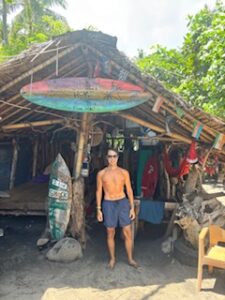
In this post, I’m focusing on just four islands: Lombok and the three Gili Islands — Gili Trawangan, Gili Meno, and Gili Air.
Lombok
Located east of Bali, Lombok is often described as a quieter, less-developed alternative to its famous neighbour, with pristine beaches, excellent surf breaks — particularly in the south — and the imposing Mount Rinjani volcano in the north. Similar to Bali in size and population density, Lombok has around four million inhabitants.
The island’s indigenous Sasak people are closely related to the Balinese, but unlike the predominantly Hindu population of Bali, the Sasak are mostly Muslim. Home to more than 8,000 mosques, Lombok is often referred to as “the island of a thousand mosques”. Mataram, the island’s capital and largest city, lies on the west coast, while Lombok International Airport is located inland.
Kuta, Lombok
Kuta sits on Lombok’s south coast, just twenty minutes from the airport. Unlike its busy Balinese namesake, Kuta Lombok feels laid-back and understated, known for its surf culture, scenic coastline, and relaxed pace of life. The area offers waves suitable for everyone from beginners to experienced surfers, while nearby beaches such as Tanjung Aan and Selong Belanak are perfect for swimming and long afternoons by the sea.
The town also has a surprisingly strong café and restaurant scene. These were my favourites:
Milk
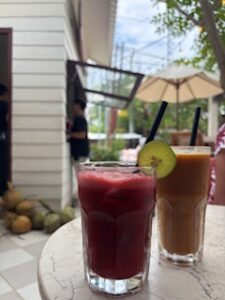
A relaxed brunch café close to the beach. I had an iced coffee, juice, and smoothie bowl. WiFi available, and several people were working on laptops. Credit cards accepted.
Marlin Café
Another beautiful café near the beach. I stopped by for coffee after surfing and met two of the café’s resident cats. WiFi and card payments available.

Munchies
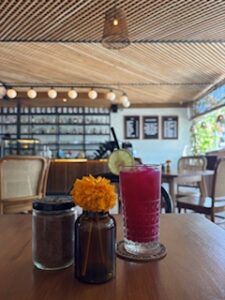
A stylish brunch café also close to the beach. I had a smoothie bowl and fresh juice. WiFi and card payments available.
Bush Radio
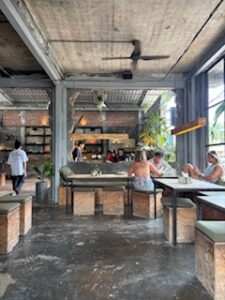
One of my favourite places in Kuta. The downstairs area had industrial-design vibes, while the upstairs terrace felt more open and relaxed. I only had coffee, but the food menu looked excellent. WiFi and card payments available.
Guru
Another cat-friendly brunch café. I had an iced coffee and green juice, though the food looked equally tempting. Popular with remote workers. WiFi and card payments available.
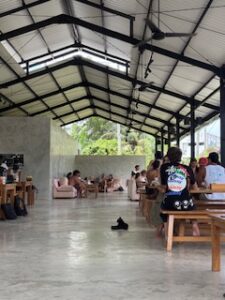
Pawon Nusantara
A beautiful restaurant serving excellent Indonesian food. I tried sate pusut (fish skewers), ayam taliwang — Lombok’s famous spicy grilled chicken — water spinach, rice, coconut ice cream, and klappertaart for dessert. I also had a “local negroni #2”, which was excellent. The meal came to around 500k IDR per person and was absolutely worth it. Card payments accepted.
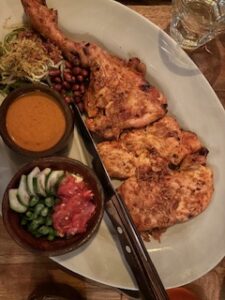
The Shack
A chilled pizzeria and Italian restaurant with great atmosphere. I had pizza and beer. Busy, but worth the wait.
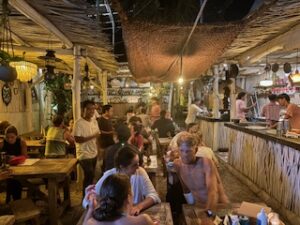
Knalpot
A spacious courtyard bar and restaurant with a pool. I only came for drinks, but the setting was beautiful and relaxed.
Senggigi
Senggigi is Lombok’s main west-coast resort area, located north of Mataram and south of Bangsal Port. It is known for its sandy bays, slower pace, and beautiful sunsets overlooking Bali’s Gunung Agung volcano. The coastal Pura Batu Bolong temple offers especially scenic ocean views.
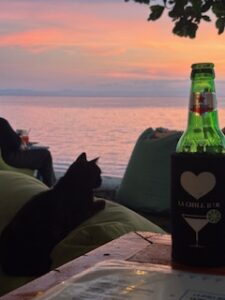
Personally, I preferred Kuta. I enjoyed its café culture, surf scene, and youthful energy more than Senggigi’s quieter resort atmosphere. That said, Senggigi is better suited to beginner surfers looking for gentler waves and fewer crowds. I would recommend Nayaka Surf School – they’re both friendly and professional.
Not being particularly interested in hiking or snorkelling, I skipped both Mount Rinjani and the Sekotong Peninsula in favour of spending more time surfing.
Mount Rinjani
Mount Rinjani is Indonesia’s second-highest volcano and one of the country’s most challenging treks. Most hikes take between two and four days, with the classic route beginning in Sembalun Village and finishing in Senaru. The final summit ascent usually begins around 2 a.m. in darkness, climbing steep volcanic sand to reach sunrise at the top. From the summit, hikers are rewarded with panoramic views over Lombok, the Gili Islands, and even Bali. Within the volcano’s vast caldera lies the crescent-shaped Segara Anak lake and natural hot springs.
Sekotong Peninsula
Sekotong Peninsula lies in southwestern Lombok and is known for its quiet beaches and snorkelling opportunities around nearby small islands such as Gili Nanggu, Gili Sudak, and Gili Bedis.
The Gili Islands
In the Sasak language, “Gili” simply means “small island”. Although many islands around Lombok include the word in their name, “the Gili Islands” specifically refers to the three tourist islands northwest of Lombok: Gili Trawangan, Gili Meno, and Gili Air.
Transport is limited to bicycles, electric scooters, and horse-drawn carts, while the islands themselves are small enough to explore easily on foot. All three islands are famously free of cars, as well as dogs — though certainly not cats. In case you wonder, cats on the Gili Islands (and throughout Southeast Asia) have short or crooked tails primarily due to a natural genetic mutation. These cats are born with this characteristic; they are not injured, nor do locals cut them off.
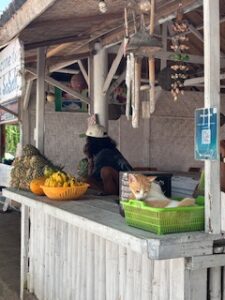
I based myself on Gili Air and visited the other two islands on day trips.
Gili Trawangan
Gili Trawangan — often shortened to Gili T — is the largest and liveliest of the three islands. It is known for snorkelling, beach bars, and nightlife.
Although often described as a “party island”, I only visited during the day. I spent time at one of the beach bars on the quieter northern coast before joining an aerial yoga class at Sunset Beach Yoga.
I rarely snorkel, but I made an exception here in order to see sea turtles at the island’s famous Turtle Point, located off the northeastern coast.
Later, I watched the sunset at ZP Beach Bar on the northwest coast — one of the best places on the island to see the sun disappear behind Bali’s Mount Agung. The atmosphere, music, and warmth of the staff made it unforgettable.
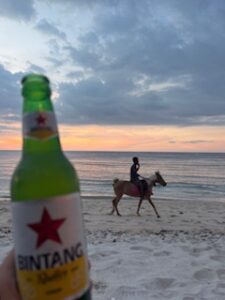
Afterwards, I had dinner at Lazy Coconut, a relaxed beach restaurant where I ordered surf and turf, while sharing beef rendang and tempe tacos for starters. Indonesian flavours worked surprisingly well in Mexican-inspired dishes.
Gili Meno
Gili Meno is the smallest, quietest, and most romantic of the three islands. Often nicknamed “the honeymoon island”, it is known for tranquil beaches and crystal-clear turquoise water.
Off the island’s west coast lies one of its most famous attractions: the Bask Nest Underwater Sculptures, a collection of 48 life-sized statues created by British sculptor Jason deCaires Taylor. The east coast, by contrast, felt almost deserted and strikingly quiet.
Gili Air
Gili Air offered the perfect balance between lively Gili Trawangan and sleepy Gili Meno. I stayed there for five nights and used it as my base to explore the other islands, though I could easily have spent my entire stay there without leaving.
The island has an open-air cinema (so does Gili T), several yoga studios, and a great selection of cafés, beach bars, and restaurants. These were my favourites:
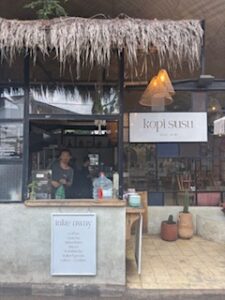
Kopi Susu
A beautiful café with a spacious courtyard. I came mainly for the cold brew coffee, though the breakfast menu looked excellent. WiFi and card payments available.
Gili Coffee Roasters
A lovely café in the centre of the island. I had a gula aren iced coffee — made with local palm sugar — and a smoothie bowl.
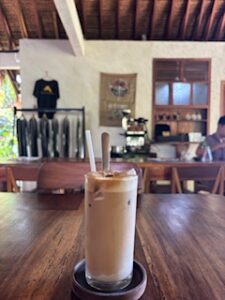
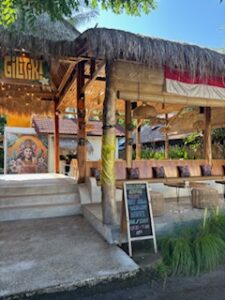
Gilitik
One of the best iced coffees I had in Lombok and the Gilis. I also tried the coconut dream bowl and fresh watermelon juice.
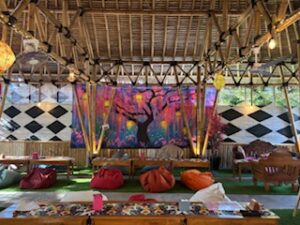
Sunny Rose
A café and restaurant I visited twice — once for breakfast and once for dinner. The atmosphere was wonderful, helped in no small part by Pim and Leo, the café’s resident ginger cats.
Mama Pizza
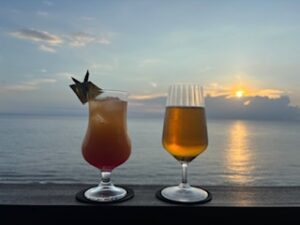
A beachfront pizzeria and a perfect sunset spot.
Papaya
A relaxed sunset bar with beanbags on the beach. I shared octopus and grilled prawns before ordering lobster for myself.
Best Time to Visit Lombok and the Gili Islands
The dry season runs from May until September or October and is generally considered the best time to visit Lombok and the Gili Islands, with sunny days, low rainfall, and ideal conditions for surfing, hiking, and beach activities.
Getting There from Bali
I’d recommend taking a boat from Padang Bai in Bali to the Gili Islands and spending several days there before continuing to Lombok.
I stayed on Gili Air for five nights and explored the other islands from there. Public boats operate between the islands, while private fast boats are available if you want more flexibility or shorter travel times — journeys between Gili Air and Gili Trawangan can take less than ten minutes by fast boat.
To reach Lombok from the Gilis, you can take either a public or private boat. Public boats arrive at Bangsal Port, which can feel chaotic and overwhelming, so it’s best to arrange onward transport in advance.
From Bangsal, Senggigi is about thirty minutes away by car, whereas Kuta takes closer to two hours.
From Kuta, you can either fly back to Bali or return overland to Bangsal Port before taking a boat back to Padang Bai.
Where to Stay in Lombok and the Gili Islands
Kuta Lombok
Mana Eco Retreat — a beautiful eco-retreat with yoga and Pilates classes open to non-guests.
Senggigi
Katamaran Hotel & Resort — a modern beachfront resort with stunning sunset views.
Gili Air
H2O Yoga and Meditation Center — a yoga-focused retreat where I attended daily aqua yoga and yoga sculpt classes. There’s also a lovely little bookshop opposite.
Another excellent option is Flowers and Fire Yoga Garden, which also offers yoga classes in a peaceful tropical setting.
Further Reading
If you enjoyed this post, check out my posts about Bali:
5 great places to stay in Bali
10 (+1) places to eat in Ubud, Bali
9 things to do and see in Ubud
Alex
(the Traveling Psychiatrist)