9 (+1) things to do in Venice
Venice is a historic city in northeastern Italy, built on more than 100 small islands in the Venetian Lagoon of the Adriatic Sea. It is connected by a network of canals and over 400 bridges, with the Grand Canal serving as its main thoroughfare. Founded in the 5th century, Venice grew into a powerful maritime republic and a major centre of trade, art, and architecture. Today it is known for landmarks such as St Mark’s Basilica, the Doge’s Palace, and the Rialto Bridge, as well as for its ongoing challenges, including flooding, mass tourism, and the preservation of its fragile built environment.
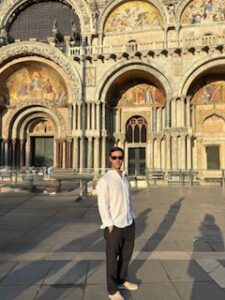
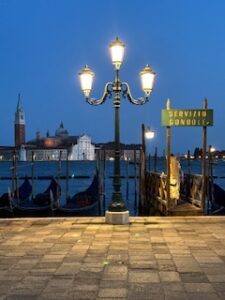
I visited Venice last September and today I am sharing my recommendations for 9 (+1) things to do there.
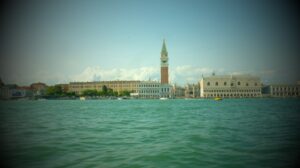
Visit St Mark’s Basilica, the Doge’s Palace and St Mark’s Square Museums
St Mark’s Basilica, located in the heart of Venice’s Piazza San Marco, is the city’s most iconic landmark and a masterpiece of Byzantine architecture. Originally built in the 9th century to house the relics of St Mark the Evangelist, it dazzles visitors with its gilded mosaics, marble columns, and ornate domes. Often called the “Church of Gold,” the basilica reflects Venice’s wealth, artistry, and deep connection to both East and West, standing as a timeless symbol of the city’s glory and spiritual heritage. The ticket costs 10 euros (you need to book it in advance).
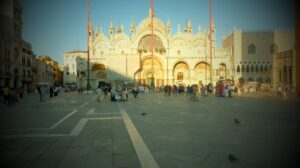
St Mark’s Square (Piazza San Marco) is not only the city’s most iconic piazza but also home to some of its finest museums. I would suggest you visit St Mark’s Basilica first, then visit the Doge’s Palace, and last the St Mark’s Square Museums.
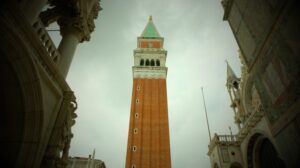
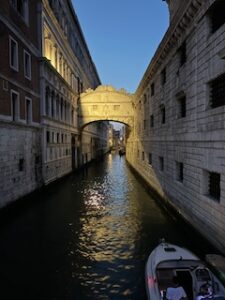
The Doge’s Palace (Palazzo Ducale) is one of the city’s most iconic landmarks and a masterpiece of Gothic architecture. Once the residence of the Doge—the leader of the Venetian Republic—it also served as the seat of government and justice. Its grand halls, ornate staircases, and lavish chambers showcase Venice’s political power and artistic splendor during its golden age. Inside, masterpieces by Tintoretto and Veronese adorn the walls, while the famous Bridge of Sighs connects the palace to the old prisons, whispering tales of intrigue and history.
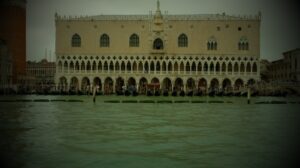
The ticket costs 30-35 euros and also allows entry to several other museums.
The Museo Correr offers fascinating insights into Venetian art, culture, and history, from Renaissance paintings to navigational instruments. Adjacent to it, the Archaeological Museum houses classical sculptures and ancient artifacts, while the Biblioteca Nazionale Marciana preserves rare manuscripts and maps. Together, these museums—collectively known as the Musei di Piazza San Marco—offer visitors a captivating journey through the artistic and intellectual legacy of Venice.
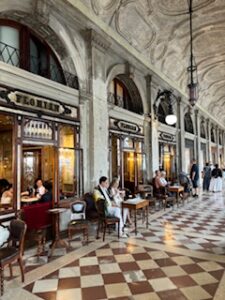
Afterwards, have a coffee at Caffè Florian, founded in 1720 on Piazza San Marco. This is the oldest café in continuous operation in Italy, famous for its ornate interiors and historic patrons like Casanova and Lord Byron.
Visit the Peggy Guggenheim Collection
Perched Along the Grand Canal in Venice’s Dorsoduro district, the Peggy Guggenheim Collection is a gem of modern art housed in the former home of its namesake collector. Overflowing with works by Picasso, Kandinsky, Pollock, Dalí, and other giants of 20th-century creativity, the museum blends bold, surrealist, and abstract pieces with the intimate air of a private salon. Its sculpture garden, overlooking a quiet canal, offers tranquil moments amid the vibrant colors and textures, making it a must-see for art lovers seeking a break from the tourist crowds. The ticket costs 16 euros (I had booked it in advance).

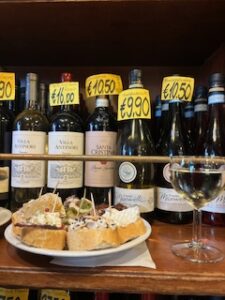
You can combine your visit to the Peggy Guggenheim Collection with a light lunch (cicchetti) and a glass of wine at Cantine del Vino già Schiavi. This is a local favourite for combining great natural wines with high-quality cicchetti. A slightly more relaxed vibe compared to the busiest spots, making it ideal for lingering over wine and small plates.
Go to the Biennale
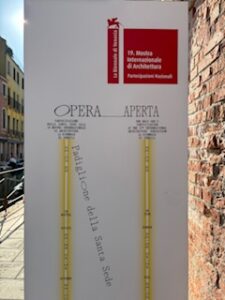
2025 was the year of the Architecture Biennale, part of La Biennale di Venezia’s vast cultural program. Unlike the film festival, which is annual, the Art and Architecture Biennales alternate. Last year, across six months, sixty-six national pavilions filled the Giardini, the Arsenale, and scattered corners of the city. My favorite? The Holy See’s project in the Complesso di Santa Maria Ausiliatrice. The space had been revitalized into a living experiment, its halls scattered with instruments—piano, harpsichord, guitar—awaiting musicians.
Eat cicchetti for lunch
Venetian cuisine is a rich blend of sea and land, shaped by centuries of trade and the city’s lagoon setting. It features fresh seafood, seasonal vegetables, and simple yet elegant dishes such as sarde in saor (sweet-and-sour sardines), baccalà mantecato (creamed cod), and risotto al nero di seppia (squid ink risotto), all reflecting Venice’s unique maritime heritage and multicultural influences.
Cicchetti are small, flavorful Venetian tapas typically enjoyed with a glass of wine or a spritz at local bars known as bàcari. Served throughout the day, these bite-sized dishes — ranging from crostini topped with seafood or prosciutto to marinated vegetables and meatballs — capture the essence of Venetian social and culinary culture.
I would recommend the following places:
Claimed to be one of Venice’s oldest wine bars (dating back to 1462), Cantina Do Mori offers a historic setting in San Polo. Expect a dark-wood interior, barrels of wine, and classic cicchetti like baccalà mantecato on toast or polpette with salt cod. A atmospheric stop for both food and history.
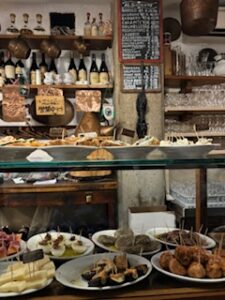
Located in the Dorsoduro neighbourhood, Cantine del Vino già Schiavi is a local favourite for combining great natural wines with high-quality cicchetti. A slightly more relaxed vibe compared to the busiest spots, making it ideal for lingering over wine and small plates.
Last but not least, there is SEPA, recommended to me by Silvia, a Venetian living in Brussels.
Go early (around lunchtime or early afternoon) for the best cicchetti-selection and fewer crowds. Standing at the bar (“in piedi”) is perfectly normal in these venues — it’s all part of the authentic Venetian experience.
Go on a gondola ride and/or take the vaporetto
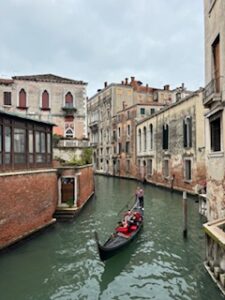
Gondolas are Venice’s most iconic symbol — elegant, hand-crafted boats that have glided through the city’s canals for centuries. Once a primary mode of transport, they are now a timeless way to experience Venice’s charm and romantic allure from the water. A gondola ride costs 90 euros and lasts about 30 minutes. It’s worth it.
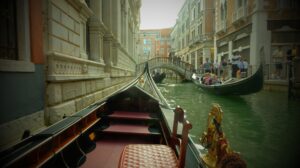
The Grand Canal is the main waterway of Venice, gracefully winding through the heart of the city in a sweeping S-shape. Lined with magnificent palaces, historic churches, and bustling markets, it has served as Venice’s primary thoroughfare for centuries. Gondolas, vaporettos, and water taxis glide along its shimmering waters, offering unparalleled views of the city’s architectural splendor. Crossing beneath its iconic bridges, including the Rialto and Accademia, a journey along the Grand Canal is truly the most enchanting way to experience Venice.
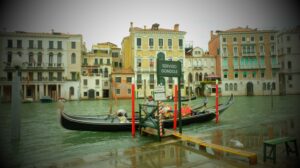
The vaporetto (Venetian water bus) is the ideal way to cross the Grand Canal, offering stunning views of the palaces and architecture, mainly on Line 1 (which makes stops at all points) and Line 2 (faster). The single ticket costs 9 euros, whereas the day pass costs 25 euros – it’s worth if you’re planning several stops.
Buy a book from the Libreria Acqua Alta
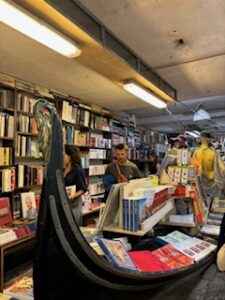
Libreria Acqua Alta, tucked away beside a quiet canal in Venice’s Castello district, is anything but an ordinary bookshop. Founded in 2002, it has become celebrated for its whimsical approach to the city’s perennial challenge of flooding — books are stored in gondolas, bathtubs, and waterproof tubs rather than traditional shelves. A highlight inside is the staircase built entirely of old encyclopaedias, offering visitors a view of the canal while reminding them of the shop’s creative ingenuity. With thousands of volumes new and used — including an extensive selection focused on Venice itself — and a handful of friendly resident cats weaving between the stacks, it’s a literary adventure as much as it is a sightseeing stop. Unfortunately, the cats had hidden away when I visited.
Go to a Vivaldi concert at Santa Maria della Pietà
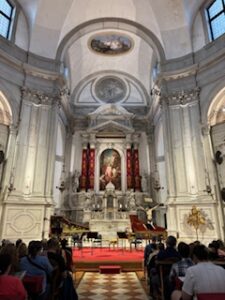
Venice is the birthplace of the classical music composer Antonio Vivaldi. On the Riva degli Schiavoni stands Santa Maria della Pietà (or della Visitazione), once attached to the orphanage where he taught violin. Today, it is a concert hall, its walls resounding nightly with strings. I attended an evening performance by Interpreti Veneziani. Naturally, they played Le Quattro Stagioni. The ticket costs 29 euros – booking in advance is recommended.
Go church-hopping around Venice
Like all Italian cities, Venice is home to many churches well-worth a visit. Most are closed in the early afternoon and open again several hours later, so it’s worth checking the opening times beforehand. These are a few that I visited:
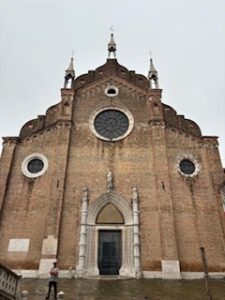
Basilica di Santa Maria Gloriosa dei Frari
The Basilica di Santa Maria Gloriosa dei Frari—known simply as the Frari—is one of Venice’s grandest churches, located in the San Polo district on Campo dei Frari. Built by the Franciscans from the mid-13th century in soaring Venetian Gothic style, it features a Latin cross plan with elaborate side aisles, apsidal chapels, and a bell tower nearing 83 meters—the second tallest in Venice after St. Mark’s. Its interior houses some of the most celebrated works of Venetian art, including Titian’s Assumption of the Virgin and Pesaro Madonna, Bellini’s Frari Triptych, and monuments commemorating luminaries like Titian himself and composer Claudio Monteverdi. It is open from 9am until 6pm – to enter, you need to purchase a ticket for 5 euros.
Church of Saint George of the Greeks
The Church of Saint George of the Greeks, or San Giorgio dei Greci, is a striking symbol of the Greek Orthodox community in Venice, located in the Castello district. Built between 1539 and 1573—with its bell tower added in 1592—it was the first Orthodox diaspora church and a focal point for Hellenic culture and faith in Italy. While its exterior displays Renaissance Venetian elegance, inside it reveals a rich Orthodox heritage: gilded iconostasis adorned with works by Cretan iconographers, frescoes, and sacred artifacts. Today, as the Metropolitan Cathedral of the Holy Archdiocese of Italy and Exarchate of Southern Europe, it remains both a place of worship and a treasure trove of Byzantine art and history. Entry is free.
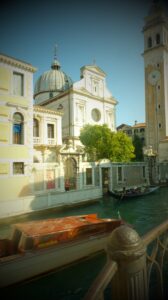
Church of San Zaccaria
The Church of San Zaccaria (Chiesa di San Zaccaria), also set in the Castello sestiere just southeast of St. Mark’s Basilica, is a magnificent blend of Gothic and Renaissance styles built between 1458 and 1515. Its lower facade, with pointed arches and ornate detailing by Antonio Gambello, gives way to the elegant marble Renaissance upper levels by Mauro Codussi. Inside, the church is home to Giovanni Bellini’s luminous San Zaccaria Altarpiece, frescoes by Andrea del Castagno in the Chapel of St. Tarasio, and many other works by Venetian masters. Beneath the chapel lies an evocative crypt—partly flooded by the lagoon—that holds tombs of early Doges and relics of St. Zechariah, father of John the Baptist. Entry is free.
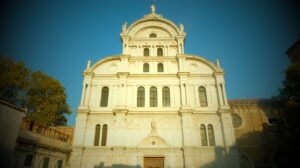
Other notable churches include:
The Basilica dei Santi Giovanni e Paolo, known in Venetian as San Zanipolo, is located in the Castello sestiere. To enter, you need to purchase a ticket.
Not far from there, is Santa Maria dei Miracoli. This is a small Renaissance gem built entirely of marble, known for its harmonious proportions and exquisite detailing. Free entry.
The Church of I Gesuiti in Venice, officially known as Santa Maria Assunta, is a stunning example of Baroque grandeur, famed for its intricate green-and-white marble interior and richly decorated ceiling frescoes. It is close to the Fondamente Nove (F.te Nove) stop, so you can combine it with a day trip to Burano and/or the other nearby islands (see below).
Madonna dell’Orto is also well-worth a visit. This was the home parish of Tintoretto and holds a number of his works, including the Presentation of Virgin at Temple, as well as his tomb. Free entry.
Go on a day trip to Burano and/or other islands
Burano, a colorful island in the Venetian Lagoon, is best known for its vividly painted houses that line its canals, creating a picture-perfect setting at every turn. Traditionally a fishing village, the bright colors once helped fishermen find their way home through the fog. Today, Burano is equally famous for its centuries-old lace-making tradition, with local artisans still crafting intricate designs by hand. Just a short boat ride from Venice, it’s a charming escape that feels like stepping into a watercolor painting.
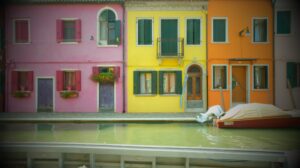
When I visited Burano, I spent a couple of hours walking around and taking pictures of the colorful houses. I also walked across the island of Mazzorbo, connected to Burano with a footbridge. If you have more time available, you could get off the vaporetto at other islands, like Murano and/or Torcello.
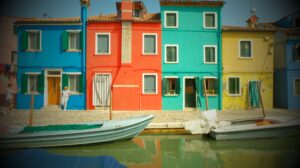
To get to Burano from Venice, take the Line 12 Vaporetto (water bus) from the Fondamente Nove (F.te Nove) stop; it’s a scenic 40-minute ride past Murano. The latter is far closer to Venice and there are more lines getting there (also from Fondamente Nove). To get to Torcello, you can also take Line 12 (past Burano) or get off at Burano and then take a quick 5-minute Line 9 shuttle to Torcello. The single ticket costs 9 euros, whereas the day pass costs 25 euros – it’s worth if you’re planning to visit several islands.
Go on a day trip to Treviso and eat a tiramisù
Treviso is a charming city in northern Italy, located in the Veneto region just north of Venice. The train journey takes less than half an hour. Known for its canals, medieval walls, and elegant architecture, Treviso offers a quieter, more authentic atmosphere compared to its famous neighbor. The city is renowned for its beautiful frescoed buildings, local cuisine, and as the home of Prosecco and the dessert tiramisù. With its blend of history, culture, and laid-back Italian lifestyle, Treviso captures the essence of Veneto’s rich heritage.
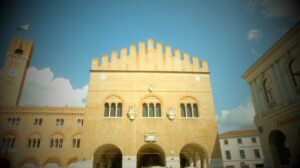
Osteria Dalla Gigia in Treviso is a beloved local spot famous for its delicious cicchetti, especially the crispy fried mozzarella bites that perfectly capture the city’s authentic Venetian flair. Not far from the Osteria Dalla Gigia, there’s Treviso Tiramisù Palazzina Barberia, where I had a coffee and a tiramisù.
Where to eat and drink in Venice
Caffè Florian, founded in 1720 on Piazza San Marco, is the oldest café in continuous operation in Italy, famous for its ornate interiors and historic patrons like Casanova and Lord Byron.
For coffee, I’d also recommend Caffè del Doge. Although it is very close to Rialto Bridge, it is on a quiet alleyway and therefore hidden. The espresso costs less than 2 euros.
I’d also recommend Estate ai crociferi. The courtyard is such a beautiful place – very relaxing. You can combine it with a visit to the Chiesa di Santa Maria Assunta detta I Gesuiti (literally next door and well worth a visit on its own right).
Harry’s Bar, opened in 1931 by Giuseppe Cipriani, is a legendary gathering spot known for inventing the Bellini cocktail, attracting celebrities and writers from around the world. I went there for an aperitivo (before dinner that is).
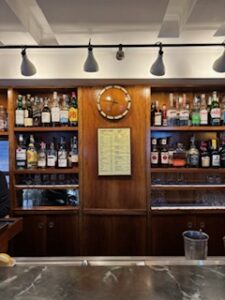
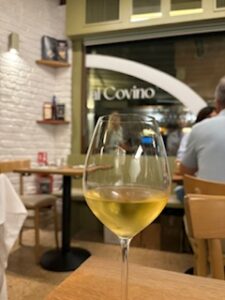
For dinner, I would recommend Al Covino and Antiche Carampane. Booking in advance is strongly recommended.
Nestled in the narrow streets between the Rialto Fish Market and Campo San Polo, Antiche Carampane is a restaurant that locals take serious pride in. Known for its faithful devotion to Venetian seafood cuisine — from raw fish carpaccio to the signature “baccalà mantecato” and “spaghetti in cassopipa” — it sources ingredients each morning from the nearby Rialto market. The signage even emphasizes “No pizza, no lasagne, no tourist menu.” Ideal if you want a truly authentic Venetian dining experience, especially with seafood and a bit of “off the beaten path” charm. Famous patrons include Woody Allen, Lionel Messi, Valeria Golino, Nicholas Sarcozy and Carla Bruni, Ozzy Osbourne, and Hugh Grant.
For ice-cream, I recommend Suso, a famous gelateria with an ever-present queue. I joined it, of course, and ordered two scoops: mandorlino (almond and pistachio with candied mandarins) and tiramisù (a nod to Treviso, birthplace of the dessert itself, barely thirty minutes away by train). Both were exquisite.
Where to stay in Venice
I stayed at Hotel Liassidi Palace, located right next to the Church of Saint George of the Greeks, and very close to Santa Maria della Pietà, as well as the Church of San Zaccaria.
How long to visit Venice for
I stayed in Venice for 5 nights (4 full days). I would not recommend staying any less.
Further reading
You can combine Venice with Verona, Florence, or even Rome.
“Venice is the most romantic place in the world but it’s even better when there is no one around.” — Woody Allen
“Venice is like eating an entire box of chocolate liqueurs in one go.” — Truman Capote
Buon viaggio!
Alex
(the Traveling Psychiatrist)