9 Places to Eat and Drink in Lucerne
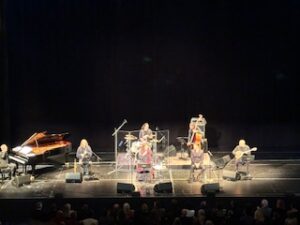
Lucerne, a picturesque city in central Switzerland, is the country’s seventh largest and one of its most enchanting destinations. I’ve been fortunate to visit twice this year — once in May, just after the Eurovision Song Contest in Basel, and again in the autumn, when the renowned Greek singer Maria Farantouri performed at the Culture and Convention Centre (KKL).
What to See (& Where to Eat and Drink in Lucerne)
Kunstmuseum Luzern (Art Museum)
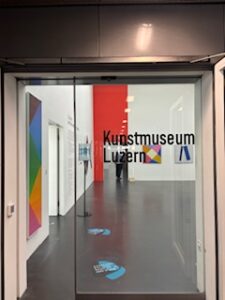
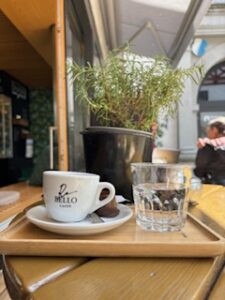
Located right next to the train station, the Culture and Convention Centre (KKL) is not only a leading concert venue but also home to the Kunstmuseum Luzern (Art Museum) — well worth a visit. Situated on the fourth floor, the museum features works by both Swiss and international artists. When I visited, there was an exhibition that included pieces by Picasso, Kandinsky, and other world-renowned painters. Afterwards, I enjoyed a coffee at the Café im Kunstmuseum, which offers a lovely view over Lake Lucerne.
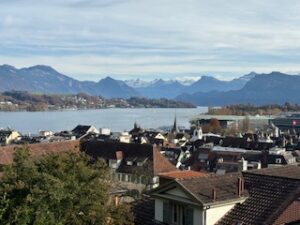
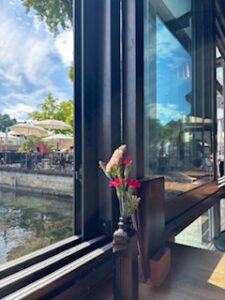
Nestled between the shores of the lake and the snow-capped peaks of the Swiss Alps, Lucerne is a city made for wandering — and for café-hopping. Among its many lakeside and riverside spots, Mill’Feuille stands out for its relaxed atmosphere. Slightly off the main tourist trail, it’s a perfect place to enjoy a quiet coffee or meal by the river.
Spreuerbrücke and the Chapel Bridge (Kapellbrücke)
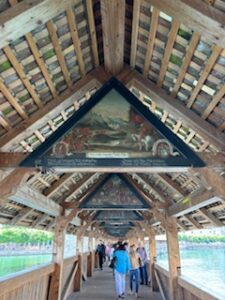
Just next to Mill’Feuille lies Spreuerbrücke, a 15th-century covered wooden bridge adorned with a striking series of paintings depicting the Dance of Death.
On the opposite bank, Café Bar Lokal offers a cozy retreat right beside the Natur-Museum Luzern, which showcases the region’s diverse fauna, flora, and an extensive collection of gold wasps.
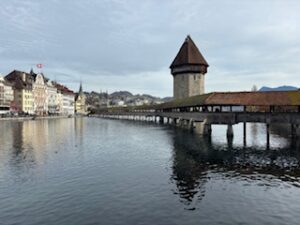
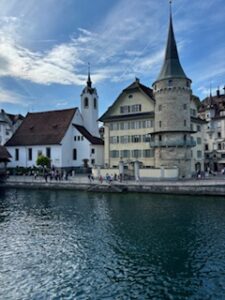
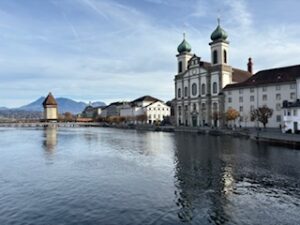
Perhaps the most iconic landmark of Lucerne is the Chapel Bridge (Kapellbrücke), a charming 14th-century wooden footbridge that connects Peterskapelle, an 18th-century chapel built over a 12th-century predecessor, to the Jesuit Church. The latter, Switzerland’s first large Baroque church, features ornate stucco decorations and a serene riverside setting — a must-see for architecture lovers.
The Church of St. Leodegar (Hofkirche) and the Lion Monument (Löwendenkmal)
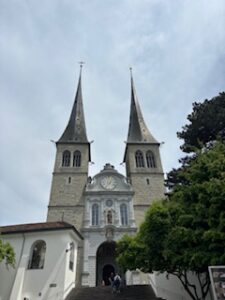
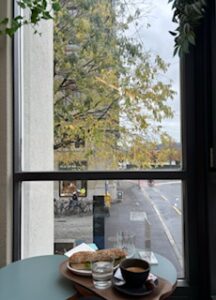
Another highlight is the Church of St. Leodegar (Hofkirche), Lucerne’s most prominent church, built in the 17th century on the site of an earlier Benedictine monastery. With its twin towers and stunning Baroque interior, it’s an unmissable landmark. Just next to it, I stopped at Vesper, a charming café where I had a coffee and a light lunch.
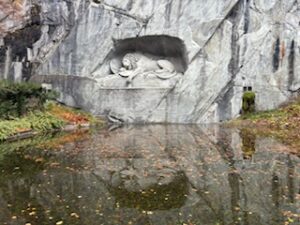
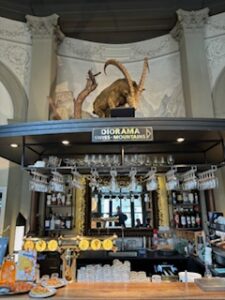
A short walk away stands the Lion Monument (Löwendenkmal) — a powerful sculpture of a dying lion carved into the rock face, commemorating the Swiss Guards who died during the 1792 Tuileries attack. Nearby, Alpineum Kaffeehaus°Bar offers a delightful spot for coffee and pastries, while the adjacent Glacier Garden (Gletschergarten Luzern) invites visitors to explore its ice-age formations, mirror maze, and leafy gardens.
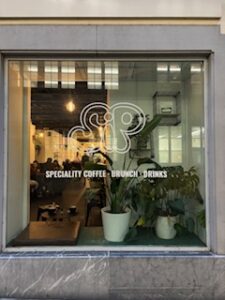
Another lovely brunch spot is SIP Café, located on the same side of the river as Hofkirche and the Lion Monument.
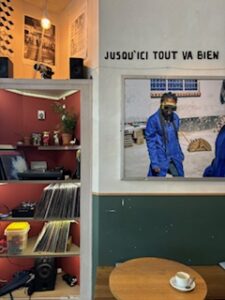
Across the Reuss River, not very far from the train station and KKL, I discovered Alfred, a stylish café-bar that quickly became one of my favourites.
Where to Dine in Lucerne
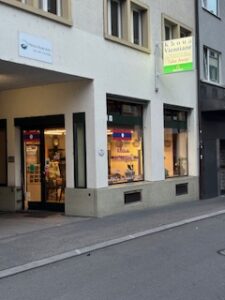
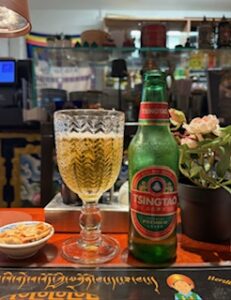
For dinner, I recommend Khoua Vientiane, a small but excellent Laotian restaurant near Alfred. It reminded me of my trip to Laos. On the opposite side of town, close to Hofkirche and the Lion Monument, Swiss Dewa serves delicious Tibetan cuisine in a warm, intimate setting.
Where to Stay in Lucerne
During my stay, I checked into Hotel De La Paix, conveniently located near Hofkirche and the Lion Monument — a peaceful base within walking distance of most of Lucerne’s main attractions.
Alex
(the Traveling Psychiatrist)
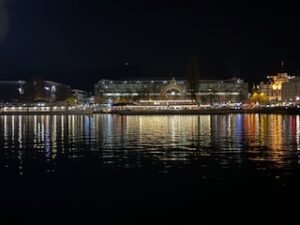
Though I’d traveled to Switzerland, I didn’t visit Geneva. I had no strong desire to see his grave first-hand. Instead, I looked around the library of Saint Gall, which he would have found endlessly enrapturing had he seen it (I recall the rough feeling of the felt slippers that visitors were given in order to protect the thousand-year-old library’s floor), caught a boat at the wharf in Lucerne and floated through the valleys of ice-covered Alps until dusk.
Han Kang, Greek Lessons