Day trips from Tokyo: Kamakura and Fujikawaguchiko
Earlier this year, I visited Japan, a country that I’ve been fascinated with since I can remember. I arrived in Tokyo early on a Monday morning, having departed from London early on a Sunday morning. In fact, I stayed in the Japanese capital both at the start and the end of my trip. Whilst there, I visited quite a few temples and shrines, museums, restaurants and bars, and I also watched a kabuki performance. I also went on a couple of day trips from Tokyo.
Day trips from Tokyo: Kamakura and Enoshima
Kamakura
Nowadays, Kamakura is a small, coastal city in Kanagawa Prefecture, about an hour away (by train) from Tokyo. Once upon a time, it used to be the capital. Nowadays, it is famous for its rich cultural heritage and iconic landmarks like the Great Buddha (Daibutsu), Hase-dera Temple, and Tsurugaoka Hachimangu Shrine.
Hase-dera
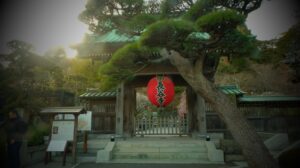
Hase-dera is a beautiful Buddhist temple located in Kamakura, known for its stunning views, seasonal flowers, and the impressive statue of Kannon, the goddess of mercy. The temple belongs to the Jodo sect and dates back to the 8th century. Its main attraction is the eleven-headed Kannon statue, carved from camphor wood and standing over 9 meters tall. Hase-dera is also famous for its hydrangea path in early summer and a tranquil garden with ponds and walking trails, offering a peaceful retreat and spiritual experience close to the sea.
Kōtoku-in (Shōjōsen-ji)
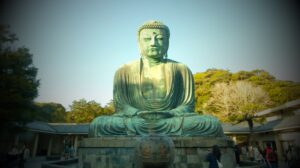
Kōtoku-in (also known as Shōjōsen-ji) was my next stop. This is a renowned Buddhist temple in Kamakura, famous for housing the Great Buddha, or Daibutsu—a massive bronze statue of Amida Buddha standing over 13 meters tall. Originally cast in the 13th century, the statue has survived earthquakes and tsunamis, now sitting peacefully in the open air after its original temple building was destroyed. The serene expression of the Great Buddha and the temple’s historical significance make Kōtoku-in a popular destination for visitors seeking both cultural insight and quiet reflection. Interestingly, the statue is hollow, and visitors can pay a few extra yen to view the interior. I was no exception.
Tsurugaoka Hachimangū
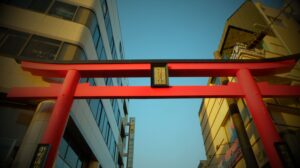
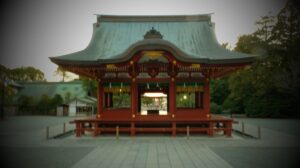
Afterwards, I continued to Tsurugaoka Hachimangū. This is the most important Shinto shrine in Kamakura, dedicated to Hachiman, the patron deity of samurai and protector of Japan. Founded in the 11th century by Minamoto no Yoriyoshi and later expanded by Minamoto no Yoritomo, the founder of the Kamakura shogunate, the shrine played a central role in Japan’s medieval political and spiritual life. Located at the heart of the city, it features a grand staircase, scenic ponds, and seasonal cherry blossoms, making it a popular spot for both worship and sightseeing.
Enoshima
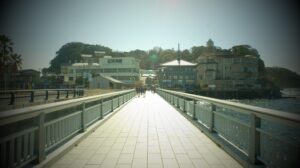
From Kamakura, I took the local Enoden train (officially called the Enoshima Electric Railway) to Enoshima. The short journey offers scenic views of Sagami Bay. Enoshima is a small island off the coast of Kanagawa Prefecture, known for its scenic beauty, historic shrines, and ocean views. Connected to the mainland by a bridge, the island is a popular day-trip destination from Tokyo. Visitors can explore the Enoshima Shrine complex, enjoy panoramic views from the Sea Candle lighthouse, and stroll through the Iwaya Caves. Unfortunately, I did not have enough time to explore Enoshima, so I only walked from the train station to the island and then back. From Enoshima, I took a direct train back to Tokyo.
Where to eat in Kamakura/Enoshima
I had lunch at Yoridokoro, a restaurant located right by the Enoden train tracks, close to Inamuragasaki station (between Kamakura and Enoshina). I had made a reservation in advance and enjoyed my meal overlooking the colourful trains. The meal was memorable not only because of the unique setting, but also because I had to whisk the egg whites to pour over my rice.
Day trips from Tokyo: Fujiyoshida and Fujikawaguchiko
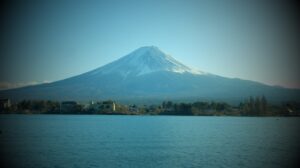
Fujikawaguchiko is located in Yamanashi Prefecture, which is home to many of the highest mountains in Japan, and Mount Fuji, the tallest mountain in Japan and a cultural icon of the country. To get to Fujikawaguchiko, you can take a train or a bus (both need to be booked in advance). The journey takes about 2 hours.
Fujiyoshida
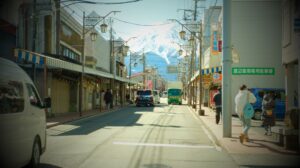
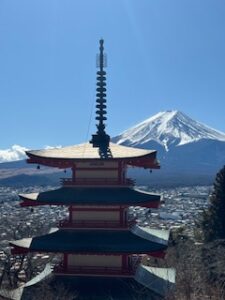
I took the train, stopping at Fujiyoshida, a small city at the northern base of Mount Fuji, built upon an old lava flow. After walking on the Instagram-famous Fuji Michi (also known as Honcho Street), I made my way to the Sangoku Daiichisan Arakura Fuji Sengen Shrine, another photogenic spot. This is a picturesque Shinto shrine famous for its stunning views of Mount Fuji. It’s best known for the iconic five-story Chureito Pagoda, which, when framed with cherry blossoms and Mount Fuji in the background, creates one of Japan’s most photographed scenes. Visitors climb nearly 400 steps to reach the pagoda, where they are rewarded with breathtaking panoramic views and a peaceful, spiritual atmosphere. Although the cherry trees were not in blossom when I visited, the sky was clear and the iconic mountain was clearly visible behind the red five-story pagoda.
Fujikawaguchiko
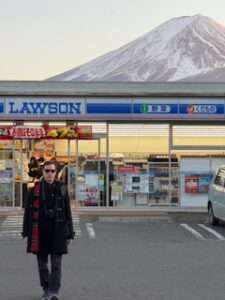
Afterwards, I continued to Fujikawaguchiko, where I actually stayed overnight. I arrived in the afternoon and spent a couple of hours walking around Lake Kawaguchiko, the most famous of the Fuji Five Lakes. Later, I stopped at the Instagram-famous Lawson convenience store, where people had their pictures taken in front of the store, against the spectacular backdrop of Mount Fuji. I recommend you have a traditional Japanese dinner at the hotel. The following morning, relax at the onsen of the hotel, admiring Mount Fuji, before heading back to Tokyo.
Where to stay in Fujikawaguchiko
I stayed at Kawaguchiko Hotel, a traditional lakeside hotel with an onsen, restaurant and bar.
Where to eat & drink in Fujiyohsida & Fujikawaguchiko
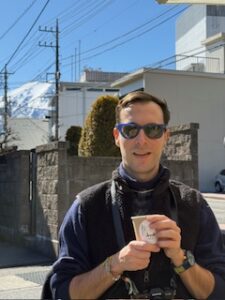
In Fujiyoshida, I had a coffee from Honcho Cha Cha, a stationary truck on Honcho Street. Behind me, the Mount Fuji in all its glory and splendour.
In Fujikawaguchiko, I had dinner at Kosaku Kawaguchiko, a traditional restaurant located about half an hour walk from the train station (it might therefore be better to take a taxi there). The restaurant’s signature dish is called Hoto, which is a thick, flat noodle stew with a rich broth and various ingredients like vegetables, meat and pumpkin.
I then had a cocktail at New York, a Billy Joel-themed bar.
More day trips from Tokyo
If you have more time in Tokyo, you might want to consider day trips to the following places:
🗻 Hakone
Nestled in the mountains near Mt. Fuji, Hakone is famed for its hot springs, scenic lake cruises on Lake Ashi, and stunning views of the surrounding volcanic landscape.
⛩️ Nikko
Home to the ornate Toshogu Shrine, Nikkō is a UNESCO World Heritage site that blends rich spiritual history with lush, forested mountains.
🏯 Kawagoe
Often called “Little Edo,” Kawagoe transports visitors back in time with its preserved warehouse-style streets, traditional sweet shops, and iconic bell tower.
🌆 Yokohama
Just south of Tokyo, Yokohama offers a vibrant mix of modern waterfront attractions, historic foreign settlements, and one of the largest Chinatowns in the world.
Further reading
To prepare for my trip, I used the Lonely Planet Japan Travel Guide. I recommend it especially if this is also your first time in Japan.
To read more about my itinerary, check out my post “First time in Japan: a 3-week itinerary“.
Alex
(the Traveling Psychiatrist)