5 (+1) things to do in Bologna
Bologna is a lively university city in northern Italy, known for its deep red architecture, miles of covered porticoes, and a food culture that has shaped Italian cuisine well beyond its borders. Home to the oldest university in the Western world, it balances academic life with a distinctly local rhythm, from busy markets to late-night piazzas. The city’s medieval towers, including the leaning Asinelli and Garisenda, rise above a historic center that feels both well preserved and thoroughly lived in, while dishes such as tagliatelle al ragù and tortellini in brodo anchor Bologna’s reputation as Italy’s culinary capital.
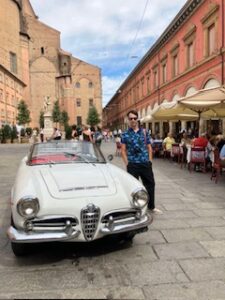
I visited Bologna a few months ago. If you’re also planning to visit Bologna, check out my recommendations in this post.
Where and what to eat in Bologna
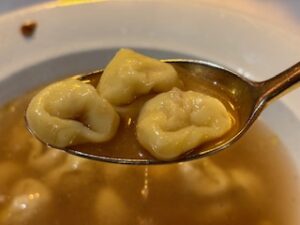
Bologna is often called La Grassa (“the fat one”) — a nickname it wears with pride. The city is the culinary heart of Italy, famous for its rich pasta dishes like tagliatelle al ragù (known abroad as Bolognese), tortellini in brodo, and lasagne verdi layered with spinach pasta and creamy béchamel. Its bustling markets, traditional osterie, and family-run trattoria make it a paradise for anyone who loves authentic, comforting Italian food.
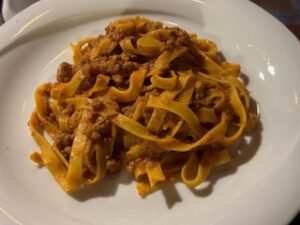
Lunch:
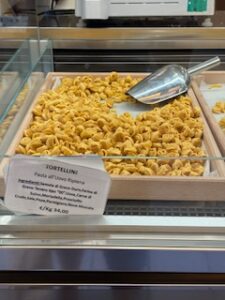
Mercato di Mezzo, located in the heart of Bologna’s Quadrilatero district, is a historic indoor market offering a vibrant mix of traditional Bolognese food stalls, artisanal products, and lively eateries perfect for sampling local flavours.
In Bologna, the piadina—a traditional thin flatbread from the nearby Romagna region—is a popular, versatile, and quick lunch or snack. The quintessential, most authentic filling combines thin slices of salty Prosciutto di Parma with squaquerone (a local, tangy, spreadable soft cheese) and sometimes fresh arugula (rocket). Bologna is also famous for mortadella (pork sausage with pistachios), another piadina filling well worth a taste.
When I visited Bologna, I bought a piadina from L’Antica Bottega at the Mercato di Mezzo and enjoyed it in the Osteria del Sole.
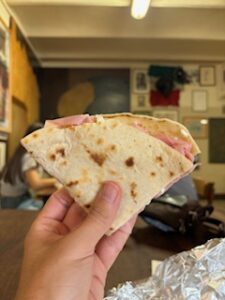
Osteria del Sole, dating back to 1465, is Bologna’s oldest tavern — a lively, no-frills spot where locals and visitors gather to enjoy wine and conversation, often bringing their own food to share at communal tables.
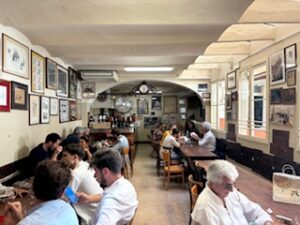
I also had a piadina at Sfarina, at the Mercato delle Erbe (another indoor food market in the city center).
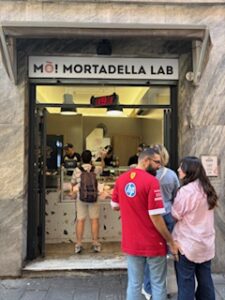
I would also recommend queuing for a piadina at Mo! Mortadella Lab. There are several locations and the service is fast, so don’t get disheartened by the queue.
Dinner:
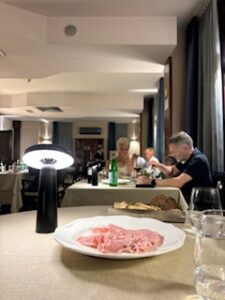
During my stay in Bologna, I had dinner at several restaurants, including Caminetto d’Oro and Va Mo La, both in the city center, as well as Ristorante Al Cambio. Although the latter is located outside the city center, it is definitely worth well a visit.
Coffee:
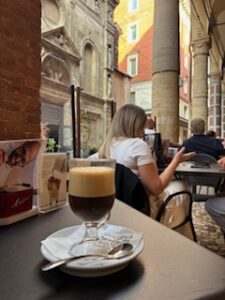
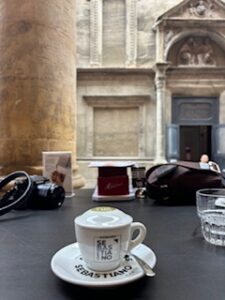
I had coffee at Cafe Letterario – Pasticceria Sebastiano Caridi. It is located at the entrance to Museo di Palazzo Fava, a museum housing art exhibitions.
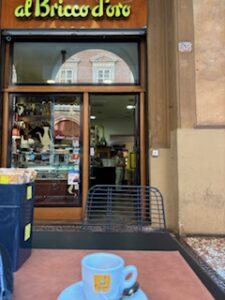
I also had a coffee at Bar Al Bricco D’Oro.
Gelato:
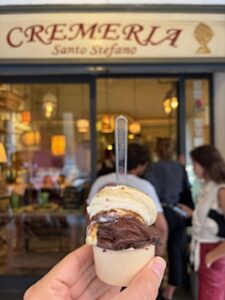
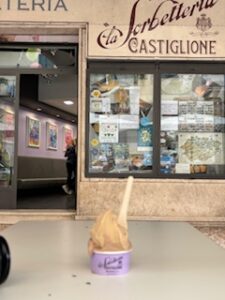
For gelato, I would recommend two places: Cremeria Santo Stefano and La Sorbetteria Castiglione. Both are a short walk away from Piazza Maggiore and there might be a queue, but it’s definitely worth it.
Wander around Piazza Maggiore
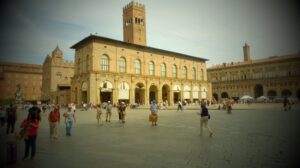
Piazza Maggiore is the vibrant heart of Bologna and one of the most beautiful squares in Italy. Surrounded by grand medieval and Renaissance buildings — including the Basilica di San Petronio, Palazzo del Podestà, and Palazzo d’Accursio — it has been the city’s social and political center for centuries. Today, it remains a lively gathering place where locals and visitors alike enjoy open-air concerts, cafés, and the timeless charm of Bolognese life.
Churches to visit
Bologna is home to quite a few churches of historical interest. Here are those I recommend that you visit:
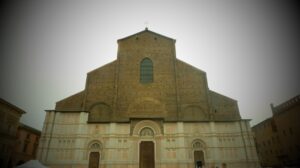
Basilica di San Petronio
Dominating Piazza Maggiore, this unfinished Gothic masterpiece is one of the largest churches in the world. Dedicated to Bologna’s patron saint, it houses exquisite frescoes and a remarkable meridian line that traces sunlight across the floor.
Basilica di Santo Stefano in Bologna
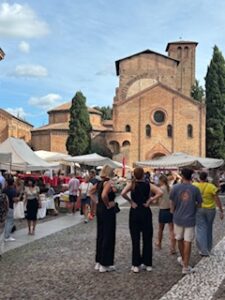
The Basilica di Santo Stefano, often called Le Sette Chiese (“The Seven Churches”), is one of the city’s most remarkable and atmospheric landmarks.
Situated in the heart of Bologna’s historic center, the complex originally comprised seven interconnected churches built over different centuries, blending Romanesque, Lombard, and early Christian architectural styles. Tradition holds that Saint Petronius, Bologna’s patron saint, founded the complex to represent the Holy Sepulchre in Jerusalem. Of the original seven churches, four remain today: the Church of the Crucifix, the Church of the Holy Sepulchre, the Church of Saint Vitale and Saint Agricola, and the Church of the Trinity (or the Martyrium). These are linked by a series of charming courtyards, cloisters, and chapels (such as Capella della Benda) – each with its own atmosphere and history.
A visit to Santo Stefano feels like stepping back in time — from the solemn simplicity of its stone interiors to the tranquil Courtyard of Pilate), once a gathering place for medieval pilgrims. It remains one of Bologna’s most evocative sites, a place where centuries of faith and architecture coexist in peaceful harmony.
Cattedrale di San Pietro
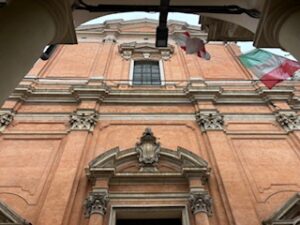
The city’s main cathedral, located on Via Indipendenza, features a majestic Baroque interior with grand frescoes and the tallest bell tower in Bologna, offering panoramic views over the rooftops.
Santuario di Santa Maria della Vita
Located in the heart of Bologna, this Baroque sanctuary is famous for Compianto sul Cristo Morto, a powerful terracotta sculpture by Niccolò dell’Arca that captures raw human emotion like few other Renaissance works.
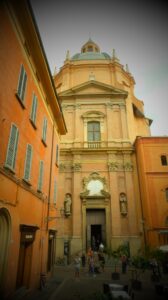
Chiesa della Madonna di Galliera e di San Filippo Neri
A hidden Baroque gem, this church stands out for its richly decorated chapels, marble altars, and the warm spiritual atmosphere inspired by St. Philip Neri’s Oratorian congregation. It is located opposite Museo di Palazzo Fava.
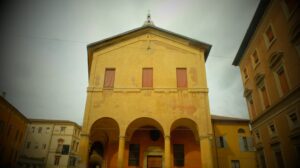
Chiesa Santuario di Santa Maria della Pioggia
Small but deeply charming, this sanctuary preserves a 16th-century icon of the Virgin Mary believed to have brought rain during a drought—earning it the affectionate name “Our Lady of the Rain.”
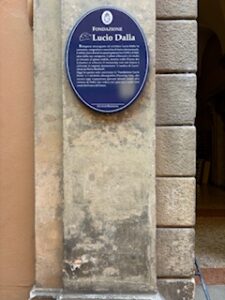
Visit Lucio Dalla’s House
Casa di Lucio Dalla, located on Via D’Azeglio (a stone’s throw away from Piazza Maggiore), was the longtime home of the celebrated Italian singer-songwriter and remains closely associated with his creative life. Filled with musical instruments, artworks, and personal objects, the apartment reflects Dalla’s eclectic tastes and his deep bond with the city. Today, it stands as an intimate cultural landmark, offering insight into the private world of one of Italy’s most influential musicians and Bologna’s enduring role in shaping its artistic voices. It is open to the public on Fridays, Saturdays and Mondays. Guided tours are in Italian and you need to book a slot in advance.
Walk around the historic center
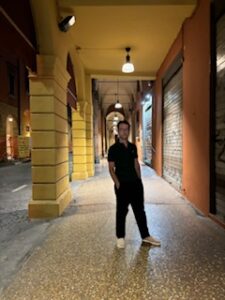
The porticos of Bologna are an iconic feature of the city, stretching for over 60 kilometers and offering sheltered walkways that blend practicality with beauty. Built between the Middle Ages and the Renaissance, these elegant arcades line the streets and connect piazzas, homes, and churches, symbolizing Bologna’s unique blend of civic life and architectural harmony. In 2021, they were recognized as a UNESCO World Heritage Site for their cultural and historical significance.
A day trip to Ravenna
Ravenna is another city in Emilia-Romagna, just over an hour away from Bologna.
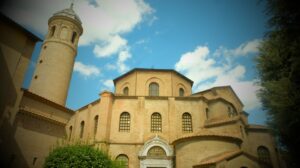
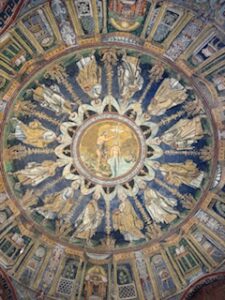
Ravenna’s sights are dominated by its Early Christian and Byzantine mosaic monuments, with eight UNESCO World Heritage sites including the Basilica of San Vitale, the Mausoleum of Galla Placidia, and the Basilica of Sant’Apollinare Nuovo. Other key sights are the Neonian Baptistery (Battistero Neoniano), and the Archiepiscopal Museum (Museo Arcivescovile) and Chapel of St Andrew (Capella di Sant’Andrea). Maximilian’s throne is one of the highlights of the museum. A combined ticket is available to visit some of the UNESCO sites, making it a worthwhile option.
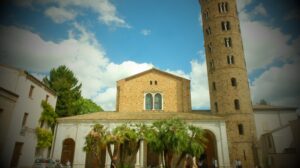
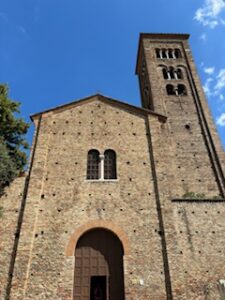
Other key sights are the tomb of the poet Dante Alighieri and his museum. Right behind Dante Alighieri’s Tomb, the Basilica of San Francesco is one of the most beautiful churches in Ravenna and it’s free to enter.
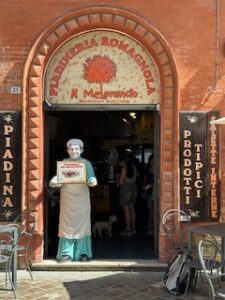
For lunch, I recommend La Piadina del Melarancio. There are a few tables outdoors, but also indoors. I tried the piadina with smoked scamorza and caramelised figs. I also tried the crescione with mozzarella and tomatoes. Absolutely delicious!
For coffee, I recommend Bar L’Incontro. Such a nice and peaceful environment away from the crowds (not that there are many crowds in Ravenna).
Where to stay in Bologna
I stayed at Royal Hotel Carlton. It is located in the city center and within walking distance from the train station.
How long to visit Bologna for
I stayed in Bologna for 4 nights (3 full days). I would not recommend staying any less.
Further reading
You can combine Bologna with Venice, Florence, or even Rome.
Buon viaggio!
Alex
(the Traveling Psychiatrist)